Wedding Insurance vs Day-Of Coverage What Every Couple Needs to Know

A wedding can involve months of planning, signed contracts, nonrefundable deposits, rented spaces, travel plans, formalwear, flowers, food, music, and dozens of people arriving on the same day. One storm, injury, venue issue, or accidental spill can turn a beautiful celebration into a very expensive problem.
That is where wedding insurance comes in. The tricky part is that “wedding insurance” can mean two different things: cancellation insurance and day-of coverage. They protect against different risks, and many couples do not realize they may need both.
This guide breaks down what each type covers, why it matters, and when to buy it so there are fewer surprises later. This is general information only, not legal or financial advice. Always read the actual policy and ask questions before purchasing.

What wedding cancellation insurance is meant to protect
Wedding cancellation insurance helps protect the money invested in the wedding if the event must be canceled or postponed for a reason covered by the policy.
Think of it as protection for the financial side of the plan. If something outside your control prevents the wedding from happening as scheduled, cancellation coverage may help reimburse certain nonrefundable costs.
Common covered costs may include:
Venue deposits
Catering deposits
Photography or videography payments
Florist payments
Entertainment deposits
Rental items
Wedding attire
Stationery or printed items
Transportation deposits
Additional costs tied to postponing and rescheduling
The exact list depends on the insurer and the policy. Some policies may cover only cancellation. Others may cover postponement, lost deposits, damage to wedding attire, damaged gifts, or vendor bankruptcy.
Common reasons cancellation insurance may apply
Cancellation coverage is usually designed for serious, unexpected events. Examples may include:
Severe weather that makes the event impossible or unsafe
Sudden illness or injury involving key people
A venue that becomes unusable because of fire, flood, or other covered damage
A vendor that goes out of business before the wedding
Military deployment or other covered duty-related schedule changes
Transportation disruptions that prevent essential people or items from arriving
The key word is covered. A policy will define exactly which events count and which do not.
For example, rain alone may not be enough if the wedding can still happen. A hurricane evacuation order or venue closure is very different from a cloudy forecast. The policy language matters.
What cancellation insurance usually does not cover
Cancellation insurance is not a safety net for every change of plans. Most policies exclude:
A change of heart
Cold feet
Budget concerns
Disagreements between family members
Known problems that existed before buying the policy
Choosing to cancel because the weather is unpleasant but not unsafe
Poor planning or missed deadlines
Vendor dissatisfaction unless the policy specifically includes that situation
If a couple decides they no longer want a certain venue, menu, or date, insurance usually will not reimburse those costs. Insurance is meant for unexpected covered losses, not elective changes.
What day-of wedding coverage is meant to protect
Day-of coverage usually refers to event liability insurance. It protects against certain accidents or property damage connected to the wedding day itself.
Many venues require this kind of coverage before they will allow the event to take place. It helps protect the venue, the couple, and sometimes other parties if something goes wrong during the event.
Common day-of coverage may include:
Guest injury at the event
Damage to the venue caused during the event
Damage to rented property
Certain alcohol-related incidents if liquor liability is included
Medical payments for minor covered injuries
Legal defense costs for covered claims
This is the type of policy a venue may ask for when it requests a certificate of insurance. The venue may also ask to be named as an additional insured.
Why venues often require day-of coverage
Venues host events with food, alcohol, dancing, candles, furniture, parking, stairs, and packed schedules. Even careful guests can trip, spill, break, or damage something.
A few ordinary examples show why venues care:
A guest slips on a wet floor near the bar.
Someone knocks over a speaker and damages the floor.
A candle scorches a table or linen.
A guest backs into a rented structure or fixture.
Red wine spills on an antique rug or upholstered chair.
Without liability coverage, the couple could be asked to pay for damage or become involved in a claim. With the right policy, covered incidents can be handled through insurance instead of out of pocket.
What day-of coverage usually does not cover
Day-of coverage is not the same as full wedding protection. It usually will not cover:
Canceling or postponing the wedding
Lost vendor deposits
A vendor failing to show up
Damage to personal items unless included
Intentional damage
Auto accidents outside the event policy
Professional mistakes made by vendors
Problems caused by uncovered alcohol service
Liquor liability is especially important to ask about. Some policies include host liquor liability, while others require an endorsement. If alcohol is served, do not assume it is covered.
The main difference between cancellation insurance and day-of coverage
Cancellation insurance protects the money spent before the wedding if the event cannot happen for a covered reason. Day-of coverage protects against accidents and liability during the event.
Both matter, but they solve different problems.
Coverage type | What it mainly protects | Best for | Common example |
Cancellation insurance | Nonrefundable wedding costs | A wedding that must be canceled or postponed | A venue becomes unusable after covered damage |
Day-of coverage | Liability and property damage | Accidents during the wedding | A guest damages venue property |
Both together | Pre-wedding investment and event-day risk | Most weddings with deposits and a venue contract | Severe weather threatens the date, and the venue requires liability coverage |
This is why the phrase wedding insurance vs day-of coverage can be confusing. Day-of coverage is often one piece of wedding insurance, but it does not replace cancellation protection.
A couple may buy only liability coverage because the venue requires it. That may satisfy the venue contract, but it may not protect deposits if the wedding is canceled. By contrast, a cancellation policy may protect prepaid costs but may not satisfy a venue’s liability insurance requirement.
Why this matters more than couples expect
Wedding costs are often paid long before the event. Deposits may be due months ahead, and many contracts become less refundable as the date gets closer. By the final weeks, a couple may have already paid most vendors in full.
That creates two major risks.
The first risk is losing prepaid money if the wedding cannot happen. The second risk is being responsible for damage or injury during the celebration.
Insurance does not remove every worry, but it can reduce the size of the financial hit when something serious happens.
Weddings involve many separate contracts
A wedding is rarely one purchase. It is usually a collection of agreements with different vendors. Each contract has its own payment schedule, cancellation terms, refund rules, and responsibilities.
A venue may refund part of a deposit under certain conditions. A caterer may not. A photographer may allow a date transfer if available. A florist may have already ordered perishable items. A band may have a strict cancellation window.
Cancellation insurance can help when covered losses cut across several contracts at once.
Weather and travel can affect more than the ceremony
For local weddings, severe weather can close roads, knock out power, or make a venue unsafe. For destination or out-of-state celebrations, travel problems can affect the couple, close family members, or essential vendors.
Day-of liability will not help much if the event cannot take place. Cancellation or postponement coverage is the policy to review for those risks.
Liability claims can be expensive even after a “small” accident
A broken railing, damaged flooring, or guest injury may not seem like a major issue during a busy reception. Later, the repair bill or claim can be much larger than expected.
Day-of coverage is meant for those event-day surprises. It is especially worth discussing if the wedding includes:
Alcohol
A private estate or historic venue
Outdoor spaces
Tents, generators, or rented structures
Dancing
Open flames or candles
Large guest counts
Expensive venue finishes or artwork
When to purchase cancellation insurance
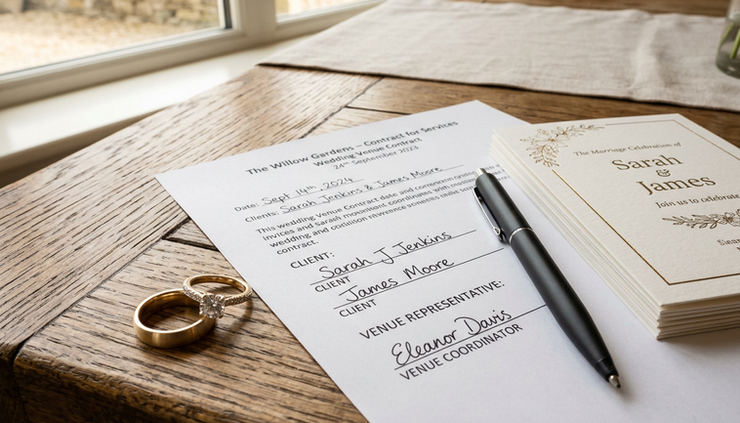
The best time to buy cancellation insurance is usually soon after making major deposits. Once money becomes nonrefundable, there is something to protect.
Buying early matters because insurance generally does not cover problems that are already known. If a storm has already been named, a family member is already seriously ill, or a venue has already announced trouble, it may be too late to insure against that specific issue.
A practical approach looks like this:
Book the venue.
Review the venue contract for insurance requirements.
Add up major nonrefundable deposits.
Ask what cancellation and postponement coverage includes.
Buy coverage before the risk becomes known or the date gets too close.
Some insurers have purchase deadlines tied to the wedding date or deposit date. Others may limit certain benefits unless the policy is bought within a specific window. Read those timing rules carefully.
Buy before the wedding investment grows
In the early planning stage, the biggest cost may be just the venue deposit. Later, the total exposure grows as catering, photography, music, flowers, attire, and rentals are added.
If the policy allows it, you may be able to increase coverage as costs rise. Keep a file with:
Contracts
Receipts
Payment confirmations
Vendor contact information
Refund policies
Updated budget totals
This makes it easier to choose a coverage limit and file a claim if needed.
When to purchase day-of coverage
Day-of liability coverage can often be purchased closer to the wedding, but waiting too long can create stress.
The best time to start is when the venue contract arrives. Many venues spell out exactly what they require, including:
Minimum liability limits
Whether host liquor liability is required
Whether the venue must be named as additional insured
When the certificate of insurance is due
Any wording needed on the certificate
Some venues require proof weeks before the event. Others request it earlier. If the certificate is late or incorrect, the venue may not allow the event to proceed until it is fixed.
Ask the venue before buying
Before purchasing day-of coverage, send the venue a short message asking for its insurance requirements in writing. Then compare those requirements to the policy.
Ask these questions:
What liability limit do you require?
Do you require liquor liability?
Should the venue be listed as additional insured?
What exact name and address should appear on the certificate?
When is the certificate due?
Are outside vendors required to carry their own insurance?
Vendor insurance is separate. A caterer, bartender, planner, photographer, or rental company may need its own coverage. A couple’s day-of policy usually does not replace vendor business insurance.
How to decide whether you need one policy, the other, or both
Not every wedding has the same risk. A small courthouse ceremony with dinner afterward has different insurance needs than a large tented reception at a private estate.
Still, most couples can make a clear decision by looking at three questions.
How much money would be lost if the wedding were canceled?
If the answer is painful, cancellation insurance deserves a serious look. The more nonrefundable money involved, the more useful it becomes.
Pay close attention to the final payment schedule. If most costs become nonrefundable 30 to 90 days before the wedding, that is when exposure becomes much higher.
Does the venue require liability coverage?
If yes, day-of coverage is not optional. It is part of using the space.
Even if the venue does not require it, liability coverage may still make sense for larger events, alcohol service, rented spaces, or private property.
Are alcohol, weather, travel, or unusual rentals involved?
These details increase risk. A backyard wedding with a tent, generator, dance floor, portable restrooms, lighting, and bartending can carry more liability exposure than a simple indoor ceremony at an established venue.
Cancellation coverage also becomes more helpful when travel, outdoor plans, or seasonal weather could affect the event.
What to check before you buy any wedding insurance policy
Policies can look similar on the surface, but the details can differ a lot. Before buying, review the following items.
Covered reasons
Look for the specific events that trigger cancellation or postponement benefits.
Exclusions
Read what the policy will not cover. This section matters as much as the coverage summary.
Coverage limits
Make sure the dollar amount matches the real cost at risk.
Deductibles
Check whether you must pay a deductible before coverage applies.
Liquor liability
If alcohol is served, confirm whether it is included or needs to be added.
Additional insured wording
For venue-required liability coverage, confirm the certificate can meet the venue’s rules.
Vendor-related losses
Some policies cover vendor bankruptcy or no-show situations, and some do not.
Timing rules
Ask when the policy must be purchased and whether benefits change based on timing.
Claims process
Keep receipts and contracts organized. Insurers usually need documentation to review a claim.
A simple planning timeline
Here is a practical timeline for buying coverage without rushing.
Planning stage | What to do |
Right after venue booking | Review the contract for insurance requirements |
After first major deposits | Price cancellation insurance and choose a coverage amount |
As vendor contracts are signed | Update your total nonrefundable costs |
Several months before the wedding | Confirm day-of liability requirements with the venue |
Before the venue certificate deadline | Buy day-of coverage and send proof to the venue |
Final month | Store policy documents with wedding contracts and emergency contacts |
The safest habit is to treat insurance as part of the planning budget, not as a last-minute errand.
The bottom line for protecting the wedding day
Cancellation insurance and day-of coverage are not interchangeable. Cancellation insurance helps protect the investment if a covered event forces a cancellation or postponement. Day-of coverage helps protect against liability and property damage during the celebration.
A good rule of thumb is simple: buy cancellation coverage when nonrefundable deposits start to matter, and handle day-of coverage as soon as the venue provides its requirements.
The right policy will not make every wedding problem disappear, but it can keep one bad surprise from becoming a much bigger financial one.


Comments